Indirect endocrown restoration for a maxillary molar
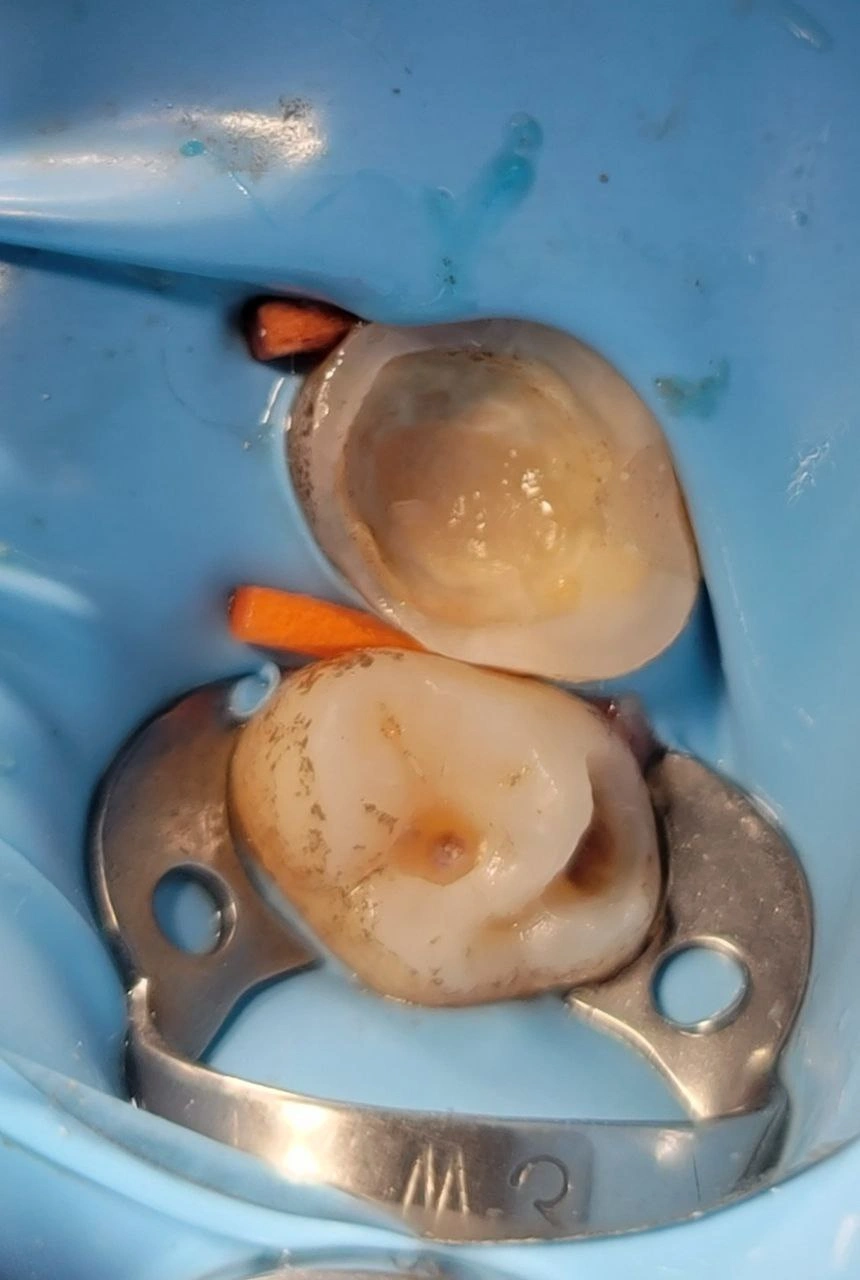
View under rubber dam isolation showing the prepared teeth after removal of old restorations and carious tissue, ready for impression.
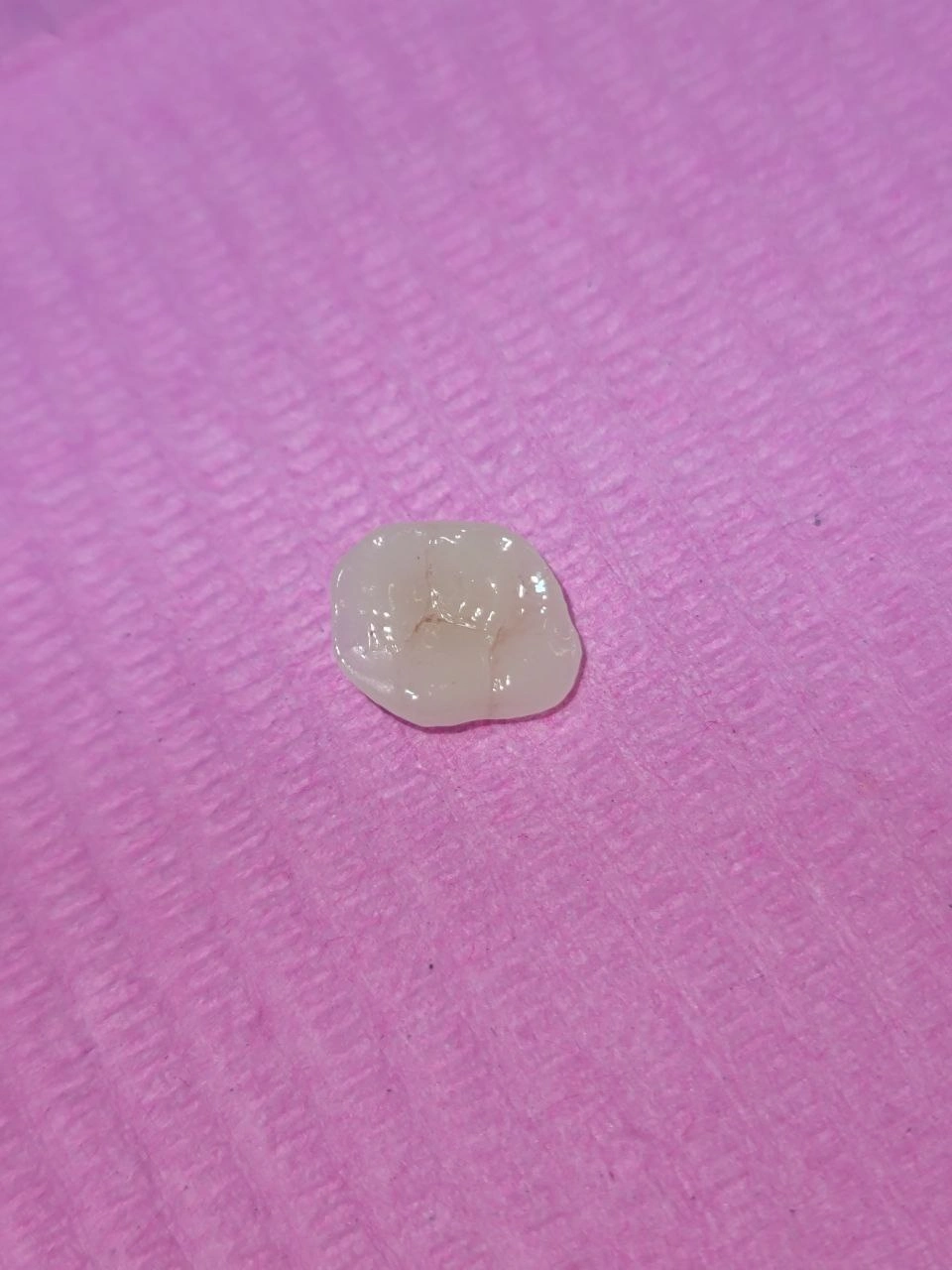
The completed esthetic endocorwn after fabrication, ready for bonding.
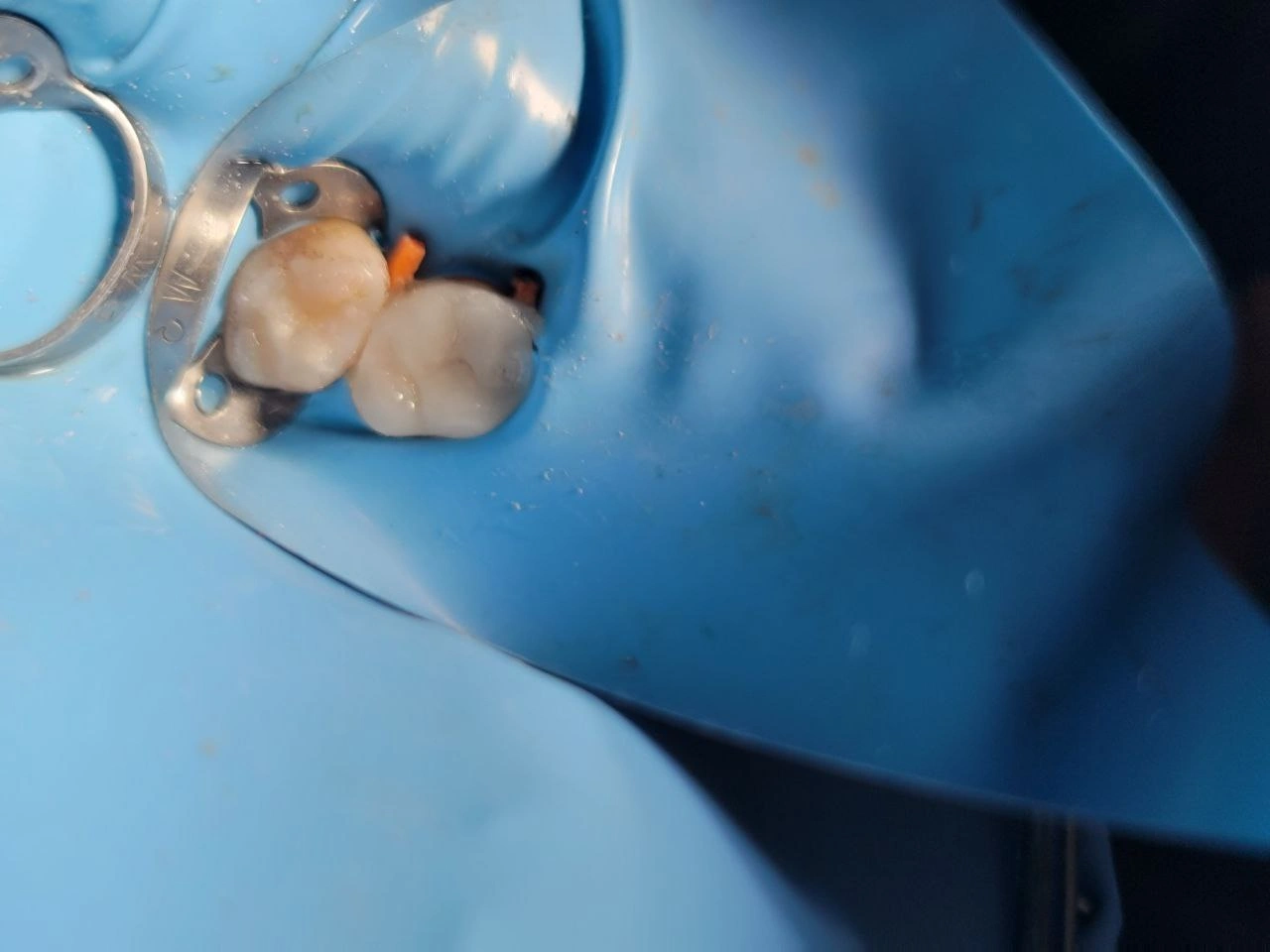
Post-operative view of the final bonded indirect restorations, showing restored anatomy, excellent fit, and natural appearance.
Introduction
The patient presented with a heavily restored posterior tooth exhibiting extensive old restorative material, secondary caries, and compromised remaining tooth structure, particularly the buccal or lingual cusps. The chief complaint was the need for a durable, esthetic restoration that would prevent cusp fracture.
Clinical Procedure
Initial Examination: preoperative findings showed a large, old, and failing restoration with evidence of discoloration and breakdown. The existing filling was large enough that replacement with a direct composite would be high-risk for recurrent fracture, indicating the need for a cusp-coverage indirect restoration.
Tooth Preparation: the procedure was performed under rubber dam isolation. The old restoration and all carious tissue were completely removed, and the tooth was conservatively prepared to receive the endocrown, involving reduction of the compromised cusp for protection. Interproximal wedges were used to protect the adjacent tooth.
Final Restoration: the indirect endocrown was bonded to the prepared tooth using a robust adhesive system. The final fit was checked for marginal seal and occlusal harmony. This approach provides superior wear resistance, strength, and marginal adaptation compared to a large direct filling.
Outcome
The treatment successfully restored the structural integrity and function of the tooth by protecting the weakened cusps. The indirect endocrown provides excellent esthetics, durability, and resistance to occlusal forces, securing the long-term prognosis of the tooth.