Replacement of Defective Posterior Restorations with Esthetic Direct Composite
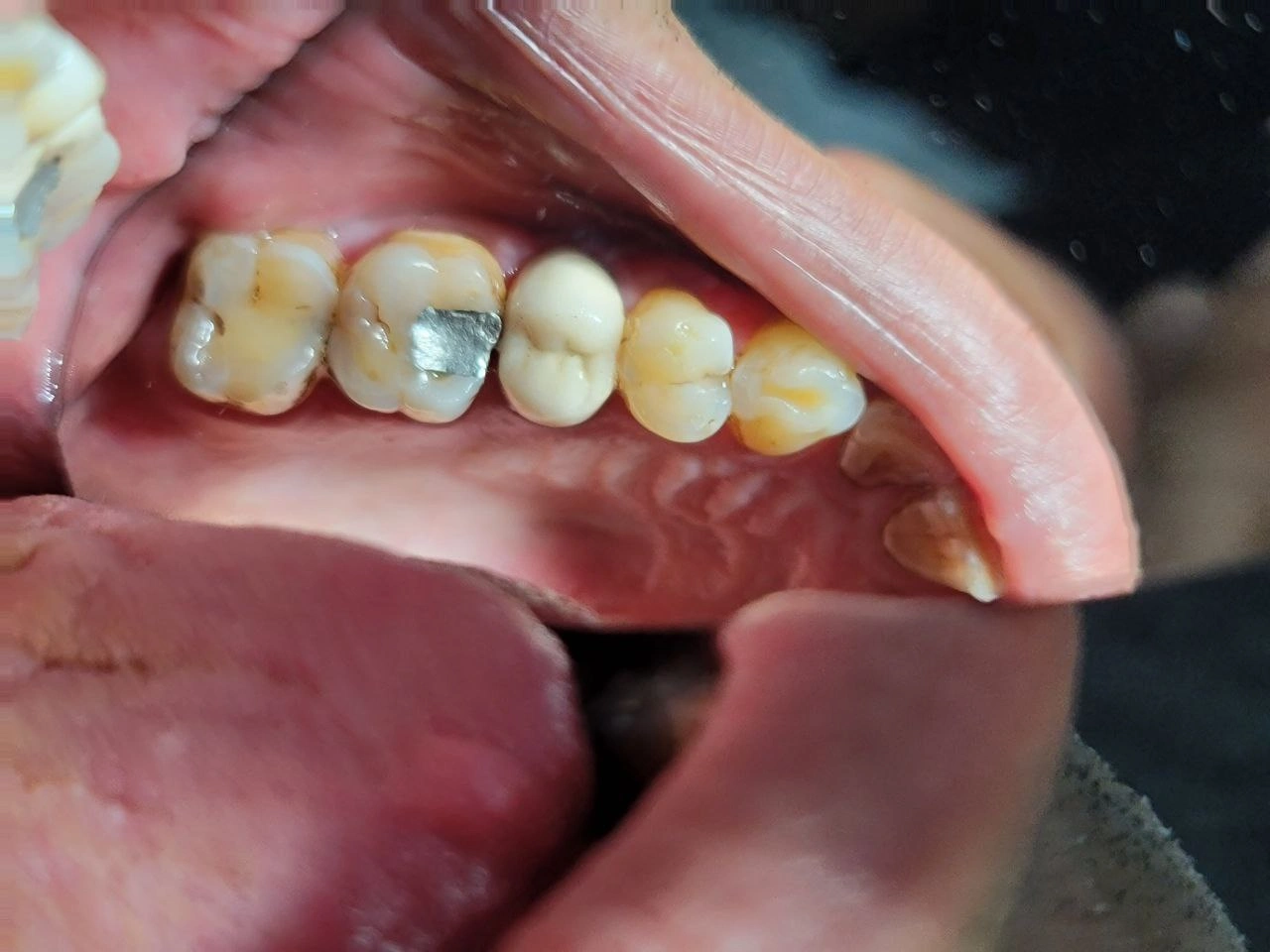
Intraoral view showing the failing amalgam and crown restorations with poor marginal integrity and discoloration before treatment
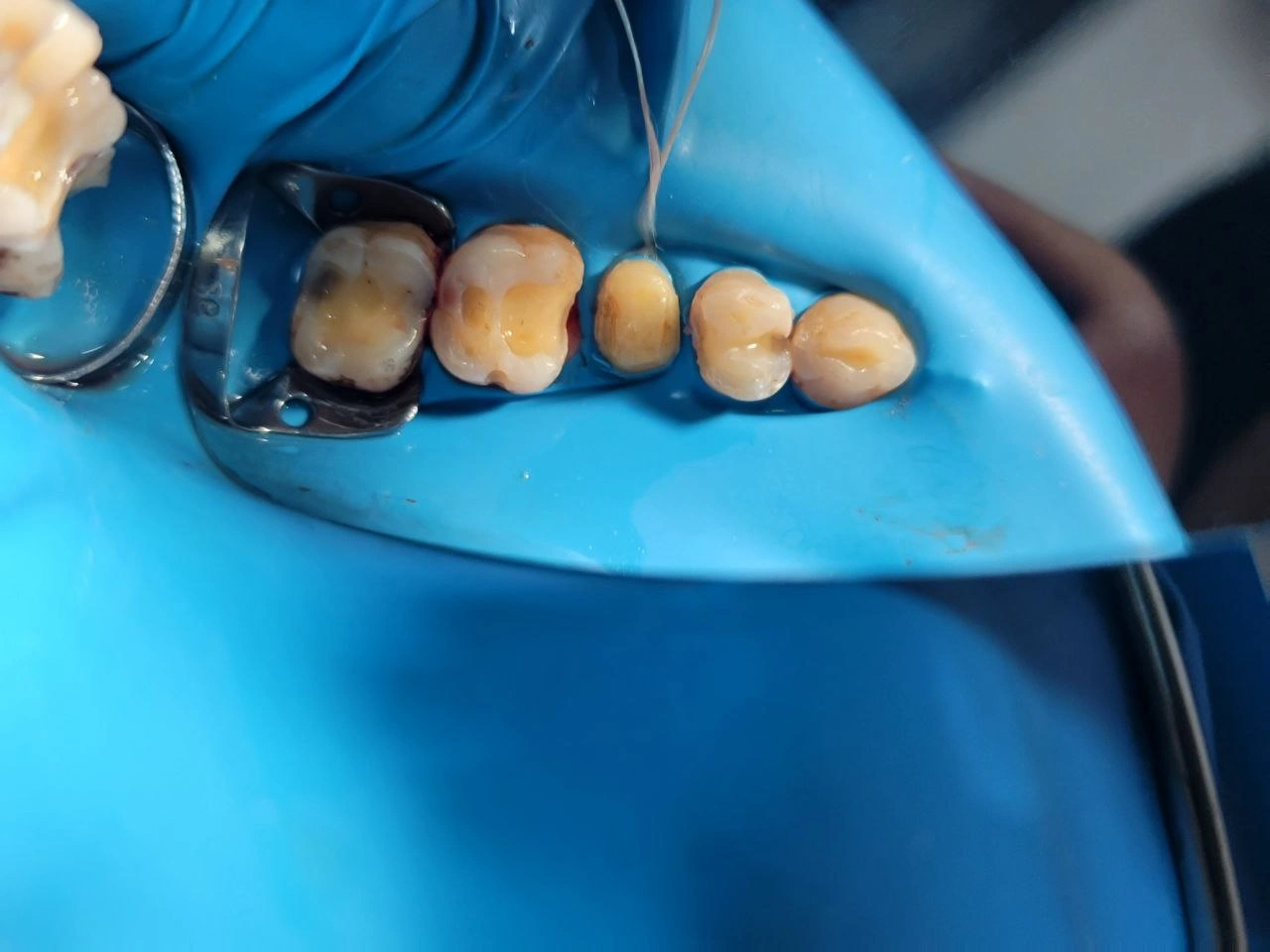
View under rubber dam isolation after the complete removal of the old restorations and carious tissue, ready for the bonding procedure.
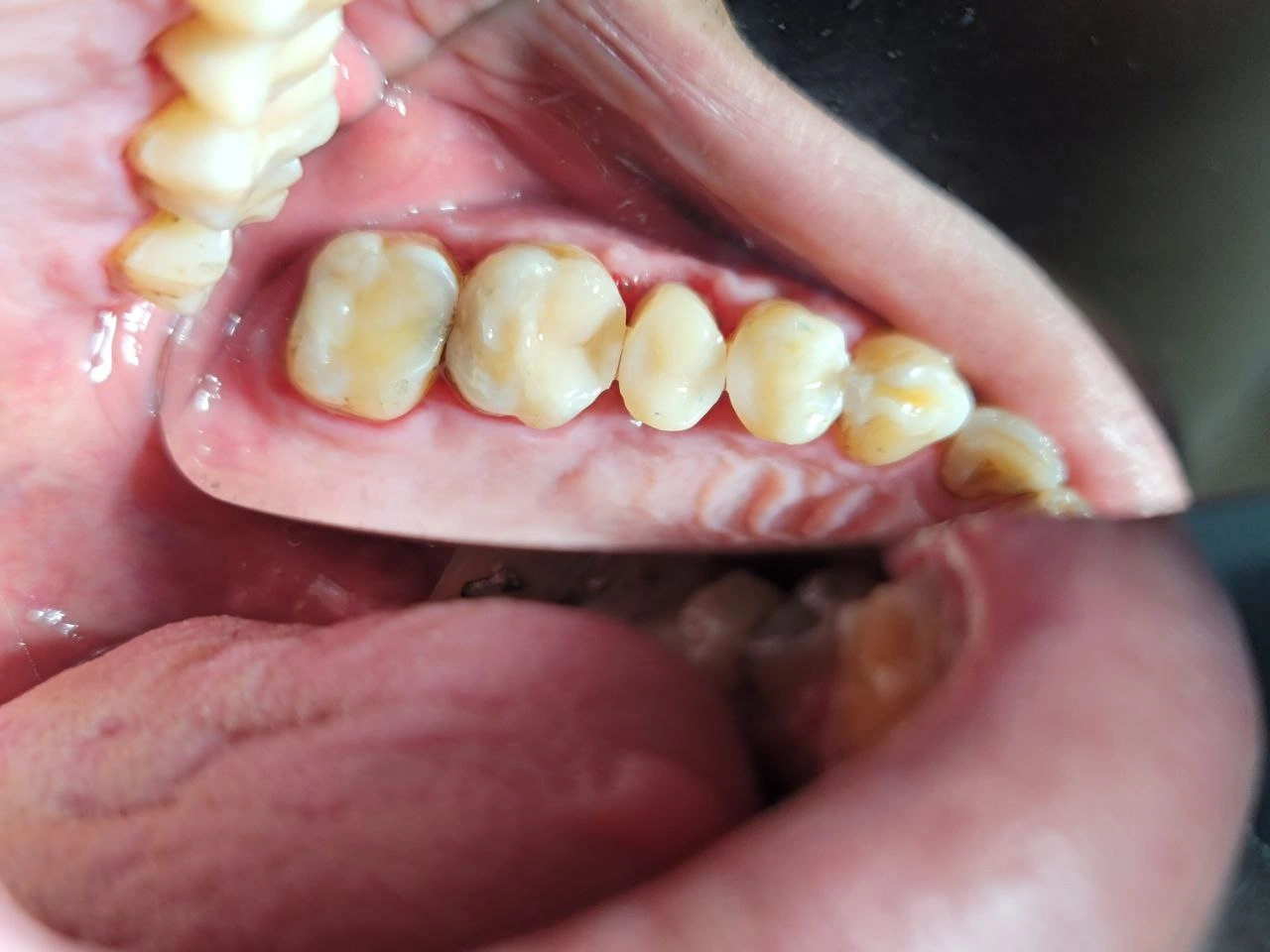
The completed esthetic direct composite restorations with ideal contour, surface texture, and excellent marginal adaptation.
Introduction
The patient presented with multiple posterior teeth (maxillary premolars and molars) containing old, failing restorations. The chief complaint was a desire to replace the amalgam fillings for esthetic reasons and to address marginal breakdown and suspected secondary caries around the existing restorations.
Clinical Procedure
Initial Examination: preoperative findings showed an old amalgam restoration on the maxillary first molar and a compromised crown on adjacent teeth, all exhibiting signs of marginal leakage, discoloration, and general wear. The surrounding tooth structure appeared sound but required careful preparation.
Tooth Preparation: the operative field was secured under absolute isolation using a rubber dam. The old amalgam and crown restorations were carefully removed along with any existing secondary caries, guided by visual and tactile assessment. This resulted in preparation cavities with healthy dentin and enamel margins. The prepared cavities were etched and bonded according to manufacturer protocol. Given this was a direct restorative procedure, no conventional provisional stage was required. A sectional matrix system was likely used to establish accurate anatomical contact points and contours prior to composite placement.
Final Prosthesis / Restoration: layered direct composite resin was placed incrementally and cured. Different shades were often employed to mimic the natural color gradient of the tooth. The restorations were meticulously sculpted to recreate the natural occlusal anatomy (cusps, grooves, and fossae).
Outcome
The treatment successfully eliminated all defective restorative material and caries, replacing them with highly esthetic, bonded composite restorations. The patient achieved restored occlusal function, excellent anatomical form, and a significant improvement in the esthetics of the mandibular posterior segment.