Esthetic Repair of Traumatized Maxillary Incisors with Direct Composite Resin
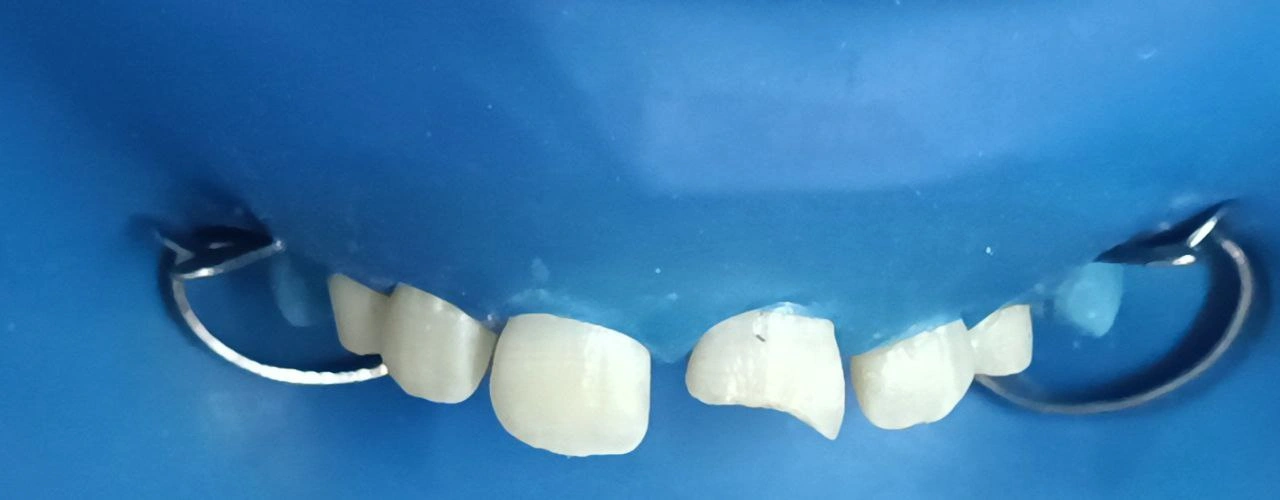
Preoperative View – Close-up view of the patient's smile showing the traumatic fractures of the maxillary central incisors and compromised esthetics.
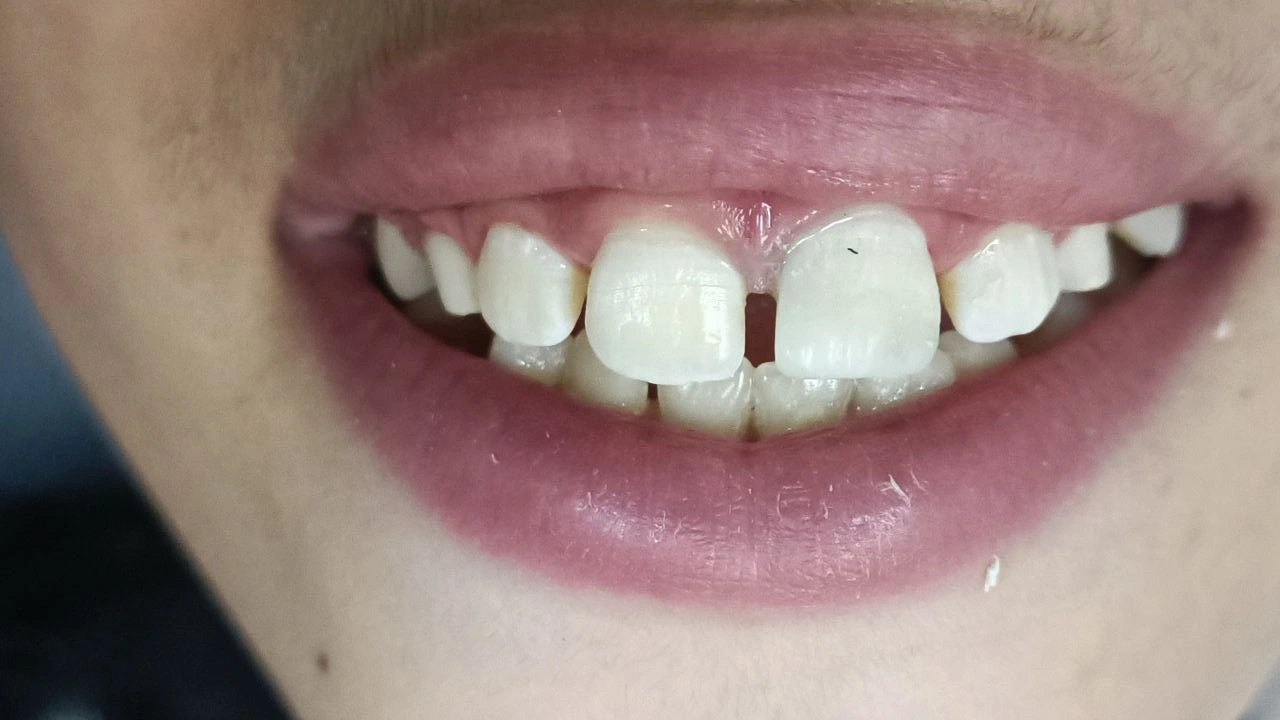
The completed direct composite restorations showing seamless repair of the incisal fractures with excellent shade match and contour
Introduction
The patient presented with uncomplicated crown fracture (Class IV fracture) of the maxillary central incisor following a traumatic injury. The chief complaint was the compromised esthetics due to the fractured tooth structure and the need for immediate, natural-looking repair.
Clinical Procedure
Initial Examination: preoperative findings showed fractured incisal edge on the maxillary right central incisors. The fractures were confined to the enamel and dentin (uncomplicated), with no pulpal exposure. Esthetics was severely compromised.
Tooth Preparation : the procedure was performed under absolute isolation with a rubber dam. The fractured tooth edges were minimally smoothed (bevelled) to provide adequate surface area for bonding and to allow for a seamless blend of the composite resin. Shade matching was meticulously performed before isolation. The preparation stage included an acid-etching and bonding protocol. A silicone index of the original/wax-up shape was used to guide the initial palatal wall restoration. No conventional provisional was required as the final restoration was completed in a single appointment.
Final Restoration: direct composite resin was applied using a multi-layer technique, mimicking the natural dentin and enamel structure. Opaque dentin shades were used to build the bulk and mask the underlying tooth, followed by highly translucent enamel shades to restore the incisal edge and final contour. The restorations were contoured, finished, and polished to a high gloss to match the adjacent natural tooth structure.
Outcome
The patient achieved an immediate and highly satisfactory esthetic result, with the fractured segments seamlessly integrated and the natural incisal morphology restored. The treatment successfully restored function, protected the underlying dentin, and significantly enhanced the patient's smile and self-confidence.